How Often Should You Get Backflow Testing Done in Illinois?
Ensuring that your home or commercial property’s drinking water remains safe, clean, and uncontaminated is one of the most critical aspects of modern building ownership. If you rely on a municipal water supply in the Land of Lincoln, you may be wondering: how often backflow testing illinois regulations require for property owners.
Under the Illinois Environmental Protection Act and the Illinois Plumbing Code (77 Ill. Adm. Code 890.1130), backflow prevention devices must be inspected and tested at least once per year. Additionally, testing is required immediately upon initial installation, relocation, or after any major repair work.
Because municipal water suppliers are legally obligated to enforce these safety programs, missing your annual inspection deadline can lead to water service shutoffs, municipal fines, or public health risks. Below is an in-depth breakdown of Illinois backflow laws, how the testing process works, and what you need to do as a residential or commercial building owner.
Quick Guide: Illinois Backflow Testing Frequency & Triggers
To help you stay compliant with state and local water authorities, the chart below summarizes when testing is required, the primary devices involved, and who is legally qualified to test them.
| Scenario / Event | Testing Frequency Requirement | Applicable Devices | Certified Professional Required |
| Standard Annual Maintenance | Mandatory once every 12 months | RPZ, Double Check (DCVA), Detector Assemblies | Certified CCCDI Inspector Plumber |
| New System Installation | Immediately before initial operation | All backflow assemblies and cross-connection setups | Certified CCCDI Inspector Plumber |
| Seasonal Irrigation Start-Up | Annually upon spring activation | Pressure Vacuum Breakers (PVB), RPZ Assemblies | Certified CCCDI Inspector Plumber |
| Post-Repair or Replacement | Immediately following physical repair | Any repaired or reinstalled assembly | Certified CCCDI Inspector Plumber |
What Is Backflow and Why Is Testing Regulated?
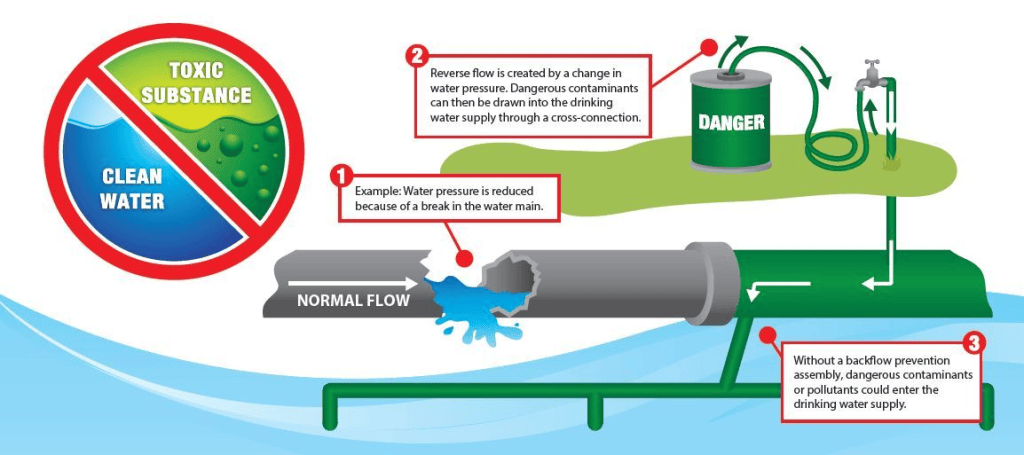
In a properly functioning plumbing network, water travels in a single direction under pressure: from the municipal supply line straight to your taps, appliances, or irrigation systems. However, unexpected hydraulic pressure shifts within the water main can reverse this flow. This reverse flow condition is called backflow.
Backflow generally occurs through two distinct hydraulic mechanisms:
- Backsiphonage: This happens when pressure in the municipal supply main drops sharply often due to a water main break, heavy firefighting activity nearby, or severe system flushing. The pressure drop creates a vacuum effect that sucks non-potable water backward into the drinking water line.
- Backpressure: This occurs when a downstream system such as a boiler, commercial chemical line, or pressurized fire sprinkler network generates higher pressure than the incoming city water main, forcing contaminated fluids backward into the clean water supply.
To protect public health, the state enforces rigorous cross-connection control rules. Knowing how often backflow testing illinois mandates helps protect both your property and your surrounding community from hazardous cross-contamination.
Illinois State Laws and Municipal Compliance Mandates
Understanding how often backflow testing illinois property owners must complete comes down to three primary regulatory standards: Title 35 of the Illinois Administrative Code (administered by the Illinois Environmental Protection Agency), the Illinois Plumbing Code (Title 77, Section 890.1130), and your local municipal water department ordinances.
The Annual Testing Rule
Both the IEPA and the Illinois Department of Public Health (IDPH) require every mechanical backflow assembly to be field-tested by a licensed professional at least once every 365 days.
Most municipal water suppliers send out automated reminder notices 30 to 60 days prior to your property’s annual due date. Localities often partner with third-party tracking portals (such as BSI Online or Aqua Backflow) to log and store annual test records.
Who Can Perform the Test?
In Illinois, standard plumbing licenses are not sufficient for backflow testing. While any licensed plumber can install piping, testing a backflow assembly legally requires a plumber certified as a Cross-Connection Control Device Inspector (CCCDI). CCCDI inspectors hold specialized credentials verified by the state to test internal differential pressure zones using calibrated diagnostic gauge equipment.
Common Backflow Devices Requiring Annual Testing
Not every valve in your home requires annual certification, but specific high-risk plumbing applications must have approved assemblies installed and tested:
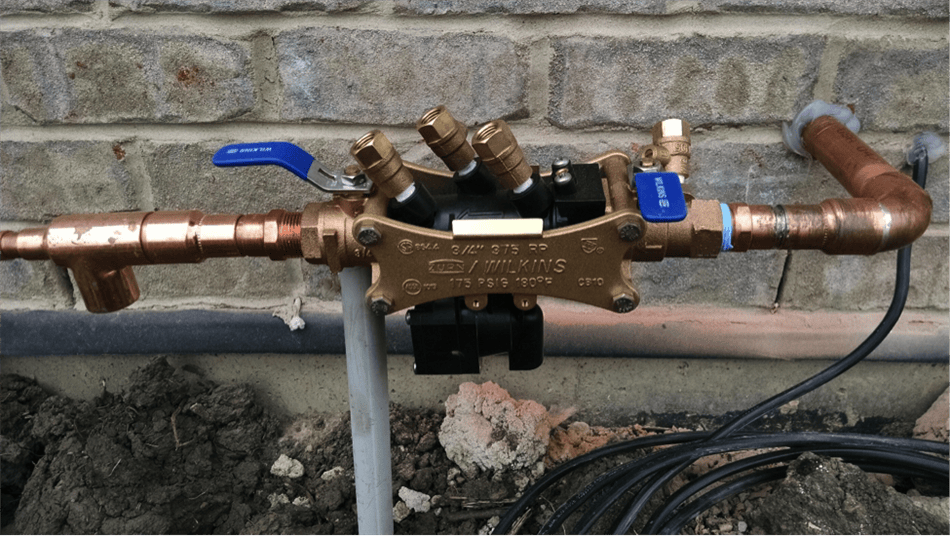
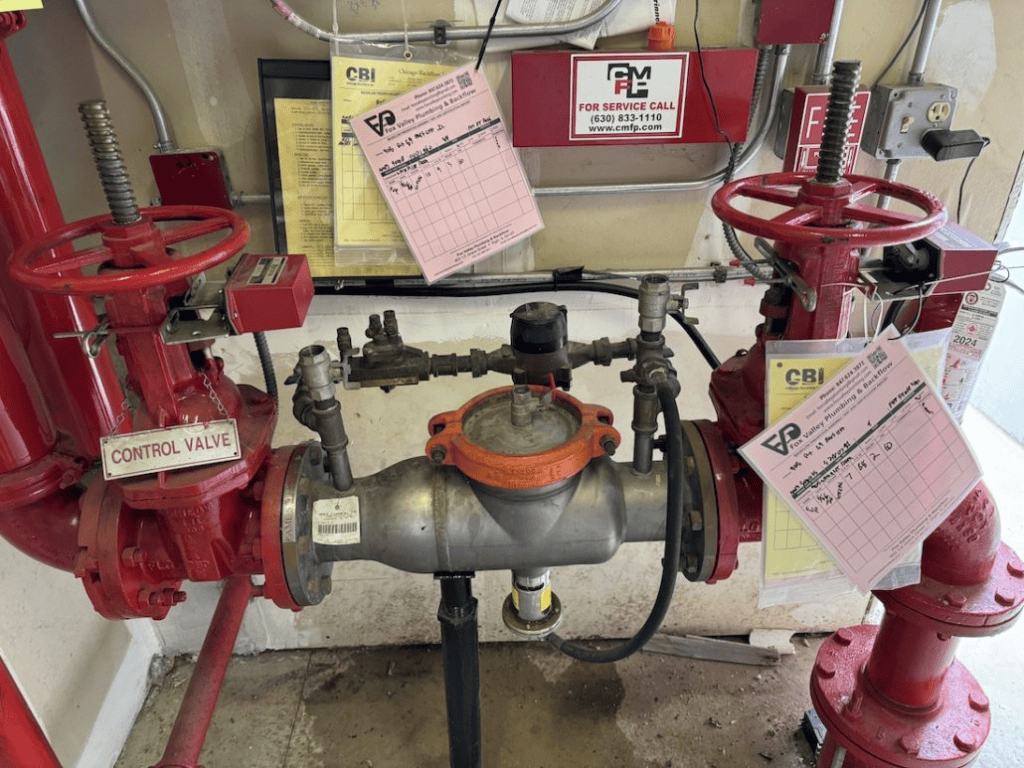
- Reduced Pressure Zone (RPZ) Assemblies: Considered the highest level of mechanical protection, RPZ valves feature two independent check valves separated by a relief valve. They are required on high-hazard cross-connections, including commercial boilers, chemical processing units, car washes, and residential lawn sprinkler systems.
- Double Check Valve Assemblies (DCVA): Frequently installed in low-to-medium hazard applications like standard residential or commercial fire suppression lines without chemical additives.
- Pressure Vacuum Breakers (PVB): Commonly utilized on outdoor underground irrigation systems to prevent lawn fertilizers and pest chemicals from being siphoned back into household tap water.
The Step-by-Step Backflow Inspection Process
When a certified CCCDI plumber performs your annual inspection, they follow strict testing protocols established by the American Society of Sanitary Engineering (ASSE) and state guidelines:
- Visual & Structural Inspection: The inspector checks the physical condition of the assembly, confirming that shutoff valves are resilient-seated and that the unit is protected from freezing or flooding hazards.
- Pressure Gauge Connection: The tester attaches a specialized, calibrated differential pressure test kit to test cocks on the backflow device.
- Check Valve & Relief Valve Testing: The tester measures internal pressure drops across each check valve to verify they seal tightly against backward pressure. For RPZ devices, they also verify that the relief valve opens at the precise differential pressure threshold.
- Documentation & Official Filing: Upon successful completion, the inspector fills out an official state backflow test report, provides a copy to the property owner, and submits the electronic record directly to your municipal water authority.
If your device fails the test, state code mandates that the assembly must be repaired or replaced and retested before being returned to full operation.
What Happens If You Skip Your Annual Backflow Test?
Disregarding municipal testing letters or missing your annual compliance deadline can create significant operational issues:
- Water Service Shut-Off: Local water utilities have the legal authority under municipal codes to terminate water service to your property if annual testing verification is not received within the notice window.
- Municipal Fines: Many cities and villages assess non-compliance penalties or administrative processing fees for overdue submissions.
- Property Liability: If an untested backflow device fails and causes cross-contamination within your building or the public main, the property owner faces severe legal liabilities and health code violations.
To prevent sudden service disruptions or compliance penalties, schedule your annual inspection with the experts at Yale the Plumber as soon as you receive your municipal reminder notice.