5 Signs You Need Water Purification Systems in Highland Park
Water quality directly shapes the safety, comfort, and functional longevity of your home infrastructure. While municipal treatment facilities work hard to process local supplies, aging infrastructure, mineral heavy ground sources, and seasonal shifts frequently introduce contaminants into residential tap lines. Recognizing the warning indicators early allows homeowners to take protective action before plumbing damage or health risks escalate.
If you suspect your domestic supply falls short of ideal standards, evaluating physical, olfactory, and structural clues provides a reliable starting point. Below, we break down the clear primary signs you need water purification equipment installed in your residential plumbing system.
Direct Overview: Key Tap Water Warning Indicators
For rapid diagnosis, the breakdown below pairs visible residential symptoms directly with their underlying chemical causes and recommended plumbing filtration solutions:
| Observed Symptom | Primary Cause | Typical Health & Home Impact | Recommended Solution |
| Metallic or Chlorine Odor | Disinfection byproducts, dissolved metals | Harsh taste, dry skin, rubber seal wear | Activated Carbon Filtration |
| White Chalky Film (Limescale) | High calcium & magnesium concentration | Pipe restriction, water heater failure | Whole-Home Water Softener |
| Murky or Discolored Water | Pipe rust, sediment intrusion, silt | Stained fixtures, valve clogging | Multi-Stage Sediment Filter |
| Frequent Plumbing Leaks | Low pH (acidic water) / high mineral friction | Corroded copper pipes, pinhole leaks | Acid Neutralizing System |
1. Unpleasant Taste or Strong Chemical Odors
Clean water ought to remain completely neutral to both taste and smell. When your tap emits distinct chemical or metallic notes, your water delivery system is actively signaling chemical imbalance or contamination.
Chlorine and Chemical Smells
Municipal treatment plants rely on chlorine or chloramines to destroy bacteria during transit through public mains. However, when these disinfectant chemicals reach your tap at high concentrations, they create a sharp, pool-like smell. Beyond an off-putting taste, high chlorine exposure strips natural oils from skin and hair during baths and showers.
Metallic and Earthy Tastes
A distinct metallic bite typically indicates elevated concentrations of iron, manganese, or zinc, often leached from older iron piping. Conversely, a musty or earthy odor usually stems from decaying organic matter or algal blooms in surface reservoirs. A dedicated filtration setup neutralizes these volatile organic compounds, restoring pure taste and odorlessness.
2. Persistent Limescale and White Mineral Buildup
If you regularly notice crusty white deposits coating your kitchen faucets, showerheads, or glass enclosure doors, your home is receiving excessively hard water. Hard water contains heavy concentrations of dissolved calcium and magnesium minerals.
Hard Water Mineral Flow:
[Dissolved Calcium / Magnesium] ➔ [Heat Application / Pressure Drop] ➔ [Solid Limescale Precipitation] ➔ [Pipe Restrictor & Heating Element Coating]
Limescale buildup extends far beyond cosmetic inconvenience. Inside your plumbing infrastructure, these mineral deposits systematically calcify:
- Reduced Water Pressure: Mineral scale builds inwardly along pipe walls, gradually choking off water flow volume throughout the house.
- Appliance Degradation: Dishwashers, washing machines, and ice makers must work harder against scale accumulation, shortening operational lifespans significantly.
- Soaring Energy Bills: Water heaters coated in internal scale require substantially more energy to heat water through the mineral barrier, elevating monthly utility costs.
Installing a whole-home softening or purification configuration prevents these minerals from settling within interior lines and expensive appliances.
3. Murky, Turbid, or Unusually Discolored Water
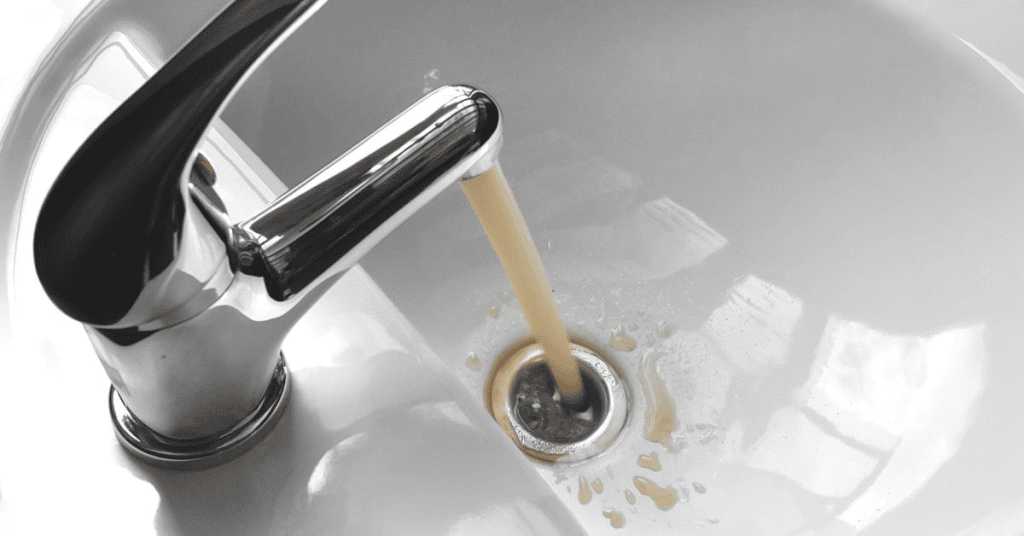
Water drawn fresh from a residential fixture should always run crystal clear. Cloudiness or unusual discoloration indicates suspended particulate matter flowing directly into your glasses and appliances.
Red, Brown, or Yellow Tints
Rust particles shedding from aging iron main pipes or deteriorating domestic plumbing cause red or reddish-brown water. Yellow hues often point to natural organic tannins present in raw water sources.
Cloudy or Milky Appearance
Milky tap water that fails to clear after resting in a glass for several minutes signals high turbidity suspended sediment, clay, or micro-particles. These particles harbor microorganisms and inhibit effective disinfection. Installing point-of-entry purification traps these particulates at the main line before they circulate through your home.
4. Unexplained Skin Irritation and Dull Laundry
Your water supply affects more than just what you consume it impacts everything it touches, including your family’s skin and textile goods.
When bathing in hard or chemically dense water, dissolved minerals react with soaps to form an insoluble residue often called “soap scum.” Instead of rinsing away cleanly, this film remains on your skin, clogging pores and aggravating conditions like eczema or chronic dryness.
Similarly, in the laundry room, these persistent minerals get trapped within fabric fibers. Over time, clothes washed in untreated water look prematurely faded, feel stiff or scratchy, and develop dingy gray undertones. Purification systems strip out these abrasive minerals, allowing soaps to rinse clean and extending the life of your wardrobe.

5. Corroded Fixtures and Recurring Plumbing Leaks
Noticeable staining around drain openings or frequent pinhole leaks in copper piping are clear signs you need water purification units capable of balancing water chemistry.
- Greenish-Blue Staining: Caused by acidic water dissolving copper lines from the inside out.
- Reddish-Brown Ring Stains: Caused by high iron levels settling on porcelain basins and toilet bowls.
- Pinhole Pipe Leaks: Acidic or highly chlorinated water erodes interior pipe walls over time, leading to unexpected hidden leaks behind drywalls.
According to water quality standards outlined by the U.S. Environmental Protection Agency (EPA), maintaining balanced drinking water pH and monitoring secondary contaminants is vital for protecting residential infrastructure. Addressing corrosive water via specialized filtration preserves your property’s plumbing network.